How to Create a Practical SEO Content Brief
Great articles don't happen by accident—they are engineered through deliberate briefs. Learn how to create content briefs that produce top-ranking articles.


What Is an SEO Content Brief and Why Is It Indispensable?
An SEO content brief is an architectural blueprint created by a content strategist or technical SEO specialist before an article is written. It provides writers and editors with clear guidelines covering target keywords, primary search intent, heading outlines, competitor coverage gaps, and required internal links.
Without a detailed brief, content creation is a gamble. Writers may produce engaging prose that nonetheless fails to rank because it answers the wrong search intent, misses critical subtopics, or lacks structural depth.
A well-crafted content brief delivers three major benefits:
- Eliminates Costly Rewrites: Aligns writers, editors, and SEO managers before drafting begins.
- Guarantees Complete Topical Coverage: Ensures your article addresses every logical question a searcher expects answered.
- Streamlines Quality Audits: Provides editors with an objective checklist for reviewing drafts before publication.
Deconstructing Search Intent: The Foundation of Every Brief
Search intent is the underlying motivation behind a user's query. If your content format clashes with search intent, no amount of backlink acquisition will help it rank consistently.
The four universal search intent archetypes are:
| Intent Category | User Mindset | Target Query Example | Optimal Content Structure |
|---|---|---|---|
| Informational | "I want to learn or troubleshoot." | "how to fix 404 errors" | Step-by-step tutorial, diagnostic checklist, troubleshooting guide. |
| Commercial | "I am comparing options before buying." | "best technical seo tools 2026" | Comparison matrix, pros/cons, hands-on testing analysis, pricing tables. |
| Transactional | "I am ready to buy or use a tool now." | "xml sitemap validator tool" | Interactive software utility, clear input form, instant output. |
| Navigational | "I am looking for a specific website." | "smartcalcbox login" | Direct brand landing page, login portal. |
Every brief must explicitly declare the target search intent so the writer adopts the correct tone and format from the opening sentence.
The Anatomy of a Flawless Content Brief
A production-ready content brief contains seven core sections:
1. Document Overview
- Working Title: Proposed headline.
- Target Audience: Who is this written for (e.g., junior web developers, small business owners)?
- Search Intent: Informational / Commercial / Transactional.
- Primary Target Keyword: The primary query driving the article.
- Secondary / LSI Keywords: 3 to 8 semantic subtopics to address naturally.
2. Proposed Metadata
- Recommended Title Tag: Under 60 characters / 580 pixels (tested via our Title Tag Length Checker).
- Recommended Meta Description: 140 to 160 characters with a clear call-to-action.
- Proposed URL Slug: Short, clean, hyphenated permalink (built with our Slug Generator).
3. Structural Heading Hierarchy (H2s and H3s)
Provide a complete outline. This prevents writers from wandering into irrelevant tangents.
4. Required Internal Links
Specify exact pages and anchor text:
- "Link to [Robots.txt Generator](/tools/robots-txt-generator) using anchor 'generate custom robots.txt directives'."
- "Link to [XML Sitemap Guide](/blog/how-to-build-useful-xml-sitemap) in the sitemap section."
5. Reader FAQs
List 3 to 5 common questions sourced from Google's "People Also Ask" or customer support tickets.
Setting Realistic Word Count & Scope Targets
Avoid pulling arbitrary word count numbers out of thin air. Instead:
- Analyze the top 3 organic results for your target query.
- Calculate their average depth and topical coverage.
- Set an editorial target that thoroughly answers the query without fluff.
If top guides average 1,500 words, setting a brief target of 1,200 to 1,800 words ensures appropriate depth. Emphasize to writers that thoroughness beats wordiness every time.
Mapping Internal Links and Semantic Entities
Include a dedicated section in the brief specifying topic cluster relationships:
- Identify which Pillar Page this article belongs to.
- List supporting spoke articles that should link into this new piece once published.
- Use our Internal Link Planning Helper to map cluster connections.
Step-by-Step: Generating Your Brief With SmartCalcBox
- Open our SEO Content Brief Generator.
- Enter your primary keyword, select search intent, and choose your preferred article format.
- Review the generated outline, title suggestions, and target word counts.
- Copy the Markdown template directly into Notion, Google Docs, or your project management system.
SEO Content Brief Generator
Generate structured editorial content briefs with outlines, target word counts, and FAQ recommendations.
Heading Structure Checker
Inspect H1 through H6 heading hierarchies, detect skipped levels, and verify document outline integrity.
Internal Link Planning Helper
Plan topic clusters, map hub-and-spoke internal links, and export structured linking roadmaps.
Frequently Asked Questions
How long should it take to create a content brief?
With automated outline generators and clear keyword research, a comprehensive brief can typically be assembled in 15 to 30 minutes.
Should writers strictly adhere to the H2/H3 outline in the brief?
Writers should treat the outline as a structural minimum. If during research they uncover an essential subtopic or practical example that enhances user understanding, they should be encouraged to include it.
Can I use AI to write content briefs?
AI tools and automated outline generators are fantastic for accelerating outline structuring and brainstorming subtopics. However, human editorial oversight is crucial to verify search intent alignment and accuracy.
About the Author: Elena Vance
Senior Content Strategist & UX AuditorElena specializes in content architecture, user experience, readability, and on-page optimization. She leads the editorial team at SmartCalcBox, ensuring every guide offers genuine, actionable value without keyword stuffing or filler.
Related SEO Guides & Tutorials

How to Organize Website Content into Topic Clusters
Random blogging rarely builds lasting organic authority. Learn how to architect topic clusters that signal comprehensive subject-matter mastery to search engines.

How to Improve Website Content Readability
Readers don't read web content—they scan it. Discover how to improve your readability metrics, lower bounce rates, and keep readers engaged.
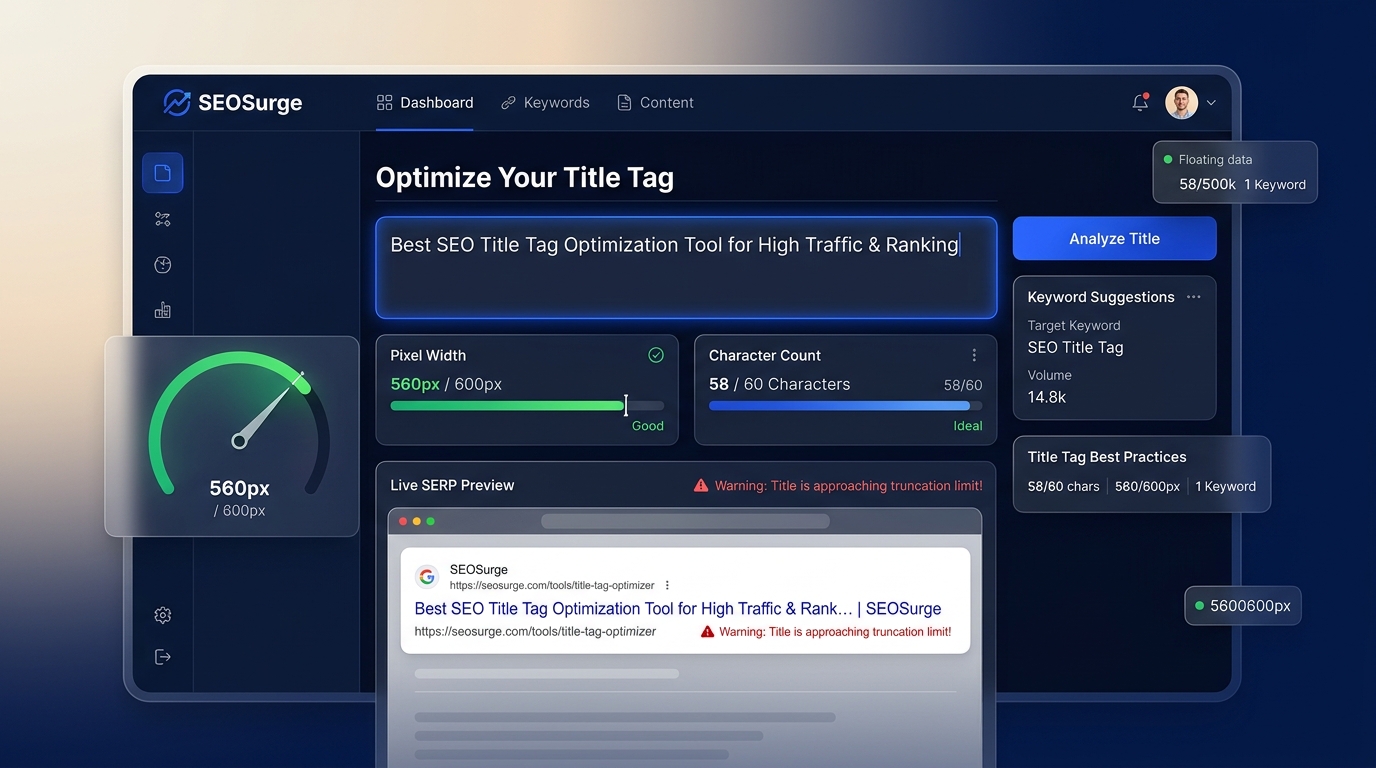
How to Write SEO Title Tags That Describe Your Page Clearly
Title tags are your website's digital storefront signboards in search engine results. Discover how to balance keyword placement, pixel width constraints, and compelling copywriting.